Why Prepare

Because storms, hacks, and aging grids fail—your plan for the dark should not.
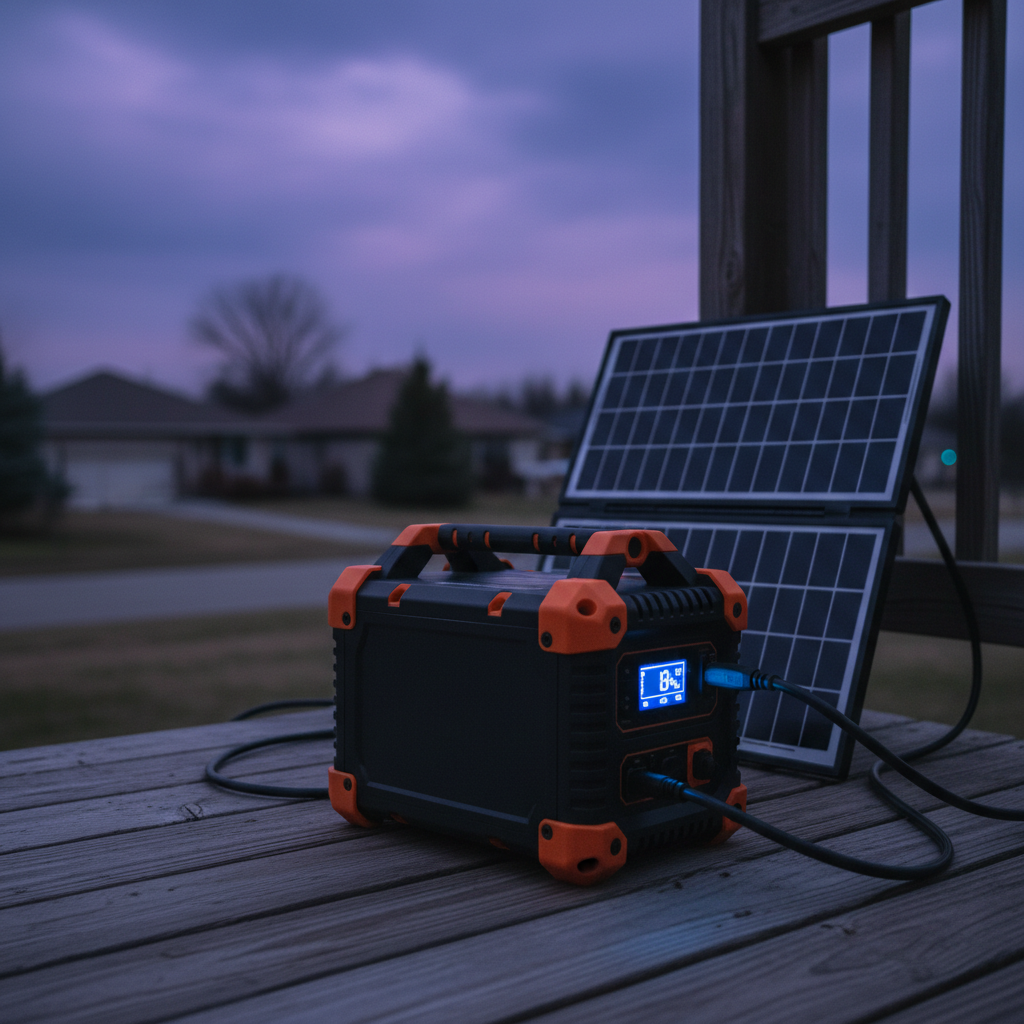
A close-up, cinematic view of a rugged portable solar generator placed on a weathered wooden deck, its matte black casing contrasted with bright orange corner guards and thick rubberized handles. Cables run to a compact fold-out solar panel propped against the railing, beyond which a darkened suburban neighborhood stretches under a moody twilight sky. The last light of day provides a cool, diffused glow, while the generator’s LCD screen emits a sharp, electric blue. Photographic realism, low-angle composition with shallow depth of field, generator in razor focus and houses subtly blurred. The mood is bold and resilient, suggesting quiet confidence in the face of an extended blackout.
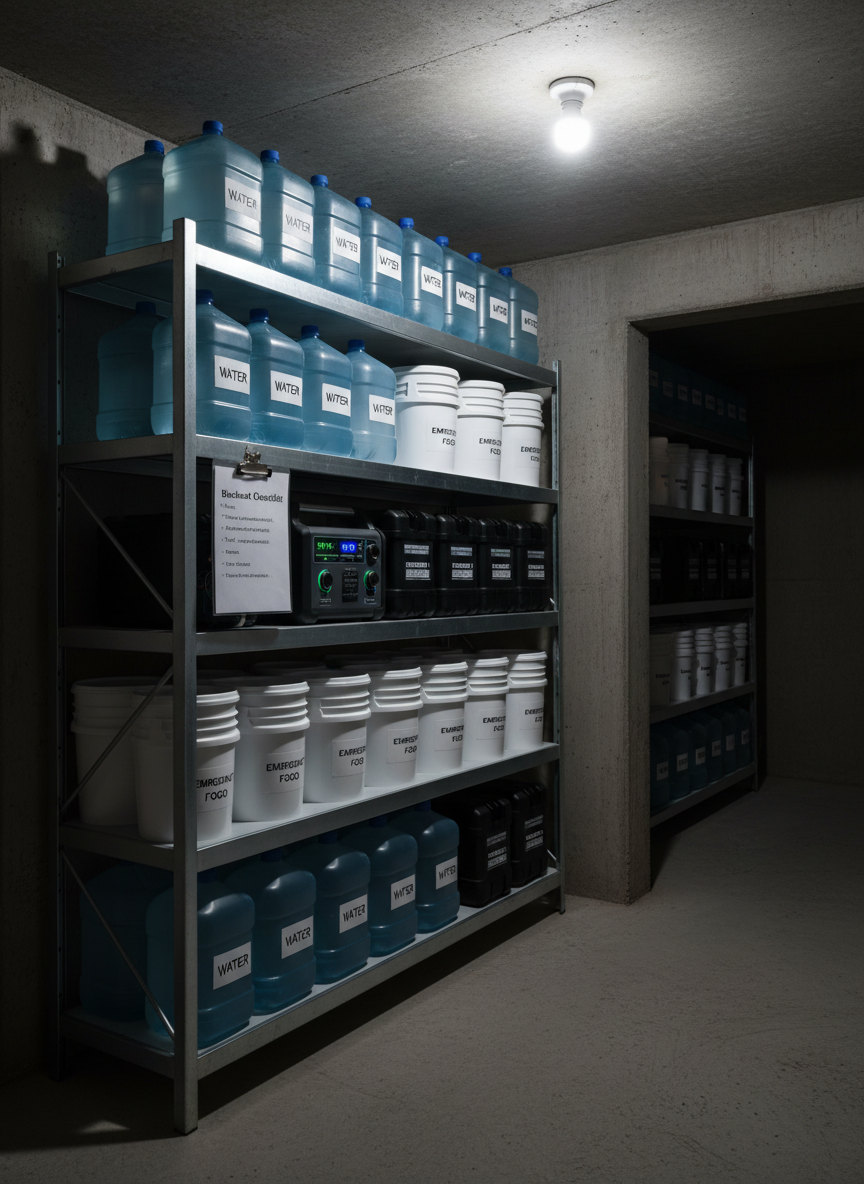
A sturdy metal shelving unit in a concrete-walled basement, fully stocked with neatly labeled water containers, stackable food buckets, battery boxes, and a compact portable power station with glowing indicator lights. A laminated “Blackout Checklist” hangs from a clip on the shelf. Overhead, a single bare bulb throws harsh, industrial light, creating crisp shadows and emphasizing textures of brushed metal, plastic, and unfinished concrete. Photographic realism, medium-wide shot with rule-of-thirds composition, shelves on one side, an open, shadowy corridor on the other. The atmosphere feels controlled, organized, and boldly pragmatic, reinforcing the idea that preparedness is a deliberate, rational plan.

From Outage To Advantage

The Blackout Brief started as one family’s storm notes and grew into a no-hype field guide. We break complex grid risks into simple steps so you can stay calm, powered, and connected when everything else flickers.

Blackout Crew

A close-up, cinematic view of a rugged portable solar generator placed on a weathered wooden deck, its matte black casing contrasted with bright orange corner guards and thick rubberized handles. Cables run to a compact fold-out solar panel propped against the railing, beyond which a darkened suburban neighborhood stretches under a moody twilight sky. The last light of day provides a cool, diffused glow, while the generator’s LCD screen emits a sharp, electric blue. Photographic realism, low-angle composition with shallow depth of field, generator in razor focus and houses subtly blurred. The mood is bold and resilient, suggesting quiet confidence in the face of an extended blackout.

Aarav Sharma

CEO

Former grid engineer translating failure reports into plain-language checklists your family can actually use.

A sturdy metal shelving unit in a concrete-walled basement, fully stocked with neatly labeled water containers, stackable food buckets, battery boxes, and a compact portable power station with glowing indicator lights. A laminated “Blackout Checklist” hangs from a clip on the shelf. Overhead, a single bare bulb throws harsh, industrial light, creating crisp shadows and emphasizing textures of brushed metal, plastic, and unfinished concrete. Photographic realism, medium-wide shot with rule-of-thirds composition, shelves on one side, an open, shadowy corridor on the other. The atmosphere feels controlled, organized, and boldly pragmatic, reinforcing the idea that preparedness is a deliberate, rational plan.

Mateo García

CTO

ER nurse focused on off-grid medical basics, from prescriptions to trauma care when systems fail.

A close-up, cinematic view of a rugged portable solar generator placed on a weathered wooden deck, its matte black casing contrasted with bright orange corner guards and thick rubberized handles. Cables run to a compact fold-out solar panel propped against the railing, beyond which a darkened suburban neighborhood stretches under a moody twilight sky. The last light of day provides a cool, diffused glow, while the generator’s LCD screen emits a sharp, electric blue. Photographic realism, low-angle composition with shallow depth of field, generator in razor focus and houses subtly blurred. The mood is bold and resilient, suggesting quiet confidence in the face of an extended blackout.

Zuri Ndlovu

Engineer

Wildfire responder turned urban-prep coach, building realistic blackout drills for apartments and tight spaces.

A sturdy metal shelving unit in a concrete-walled basement, fully stocked with neatly labeled water containers, stackable food buckets, battery boxes, and a compact portable power station with glowing indicator lights. A laminated “Blackout Checklist” hangs from a clip on the shelf. Overhead, a single bare bulb throws harsh, industrial light, creating crisp shadows and emphasizing textures of brushed metal, plastic, and unfinished concrete. Photographic realism, medium-wide shot with rule-of-thirds composition, shelves on one side, an open, shadowy corridor on the other. The atmosphere feels controlled, organized, and boldly pragmatic, reinforcing the idea that preparedness is a deliberate, rational plan.

Leila Haddad

Designer

Data analyst modeling grid risks so each Brief delivers timely, probability-backed actions, not panic.

A close-up, cinematic view of a rugged portable solar generator placed on a weathered wooden deck, its matte black casing contrasted with bright orange corner guards and thick rubberized handles. Cables run to a compact fold-out solar panel propped against the railing, beyond which a darkened suburban neighborhood stretches under a moody twilight sky. The last light of day provides a cool, diffused glow, while the generator’s LCD screen emits a sharp, electric blue. Photographic realism, low-angle composition with shallow depth of field, generator in razor focus and houses subtly blurred. The mood is bold and resilient, suggesting quiet confidence in the face of an extended blackout.

“These guides turned a scary three-day outage into an organized drill—our neighbors now follow them too.”

— Aya Nakamura