Current Briefing
-
Issue #001 · Solar for the Self-Reliant
I work in solar. When the winter storm hit, I still wasn’t ready.
I spend my days designing and operating distribution level solar systems for a living. I know the specs, the tech, and the engineering. So when a 2025 ice storm knocked out our grid for 5 days, you’d think I’d have been fine. I wasn’t — and my realization that I had the knowledge but never put it into use changed everything.
The Scenario
It was a January winter storm that nobody took seriously until it was too late. The forecast said 6–8″, then 3″, then 12″. We got about 4-6″ of snow followed by significant freezing rain. This combination made all of Central Virginia an ice rink that our meager snow plows couldn’t clear. People were trapped in their homes for a week, some people 2 weeks. When the power went out we knew it was going to be a while before crews could make repairs.
I fired up the generator. Felt smug about it, honestly. While neighbors were scrambling, I had lights, a working refrigerator, and hot coffee. I had this handled.
Then I looked at my gas cans – 10 gallons. At the rate my generator was burning through it — roughly a gallon an hour under load — I had maybe 2-3 of real comfort available if I rationed our energy use. I started rationing immediately. Generator on for two hours, off for four. On for two, off for four. Waking every few hours to add logs to the woodstove but still sleeping in a 50-degree house in between. The roads were impassable, so a gas run wasn’t an option.
Here’s the part that still gets me: I design solar systems for a living. I have spent years helping commercial and industrial clients build resilient, independent power infrastructure. I manage operations for utility scale solar facilities. And when the storm came, I had a gas-dependent generator and very little fuel.
What I Learned
The problem wasn’t that I lacked knowledge. I could tell you the efficiency curve of a monocrystalline panel at 20°F. I could size a battery bank for a 3-day outage in my sleep. The problem was the same one I see stop a lot of preppers cold: I hadn’t applied what I had learned.
There’s a particular kind of complacency that expertise breeds. You think you’ll get to it. You know exactly what you’d build when you do. And so it never actually gets built.
By day three, I was running the generator 90 minutes in the morning to charge phones, to cycle the water pumps, and keep the fridge from crossing into danger. The rest of the time we sat in coats, using battery lanterns. My neighbors with no preparedness background whatsoever were in the exact same position — despite the fact that I, theoretically, knew better.That storm didn’t humble me because I lacked expertise. It humbled me because knowledge without action is just expensive trivia.
Why I Started This Newsletter
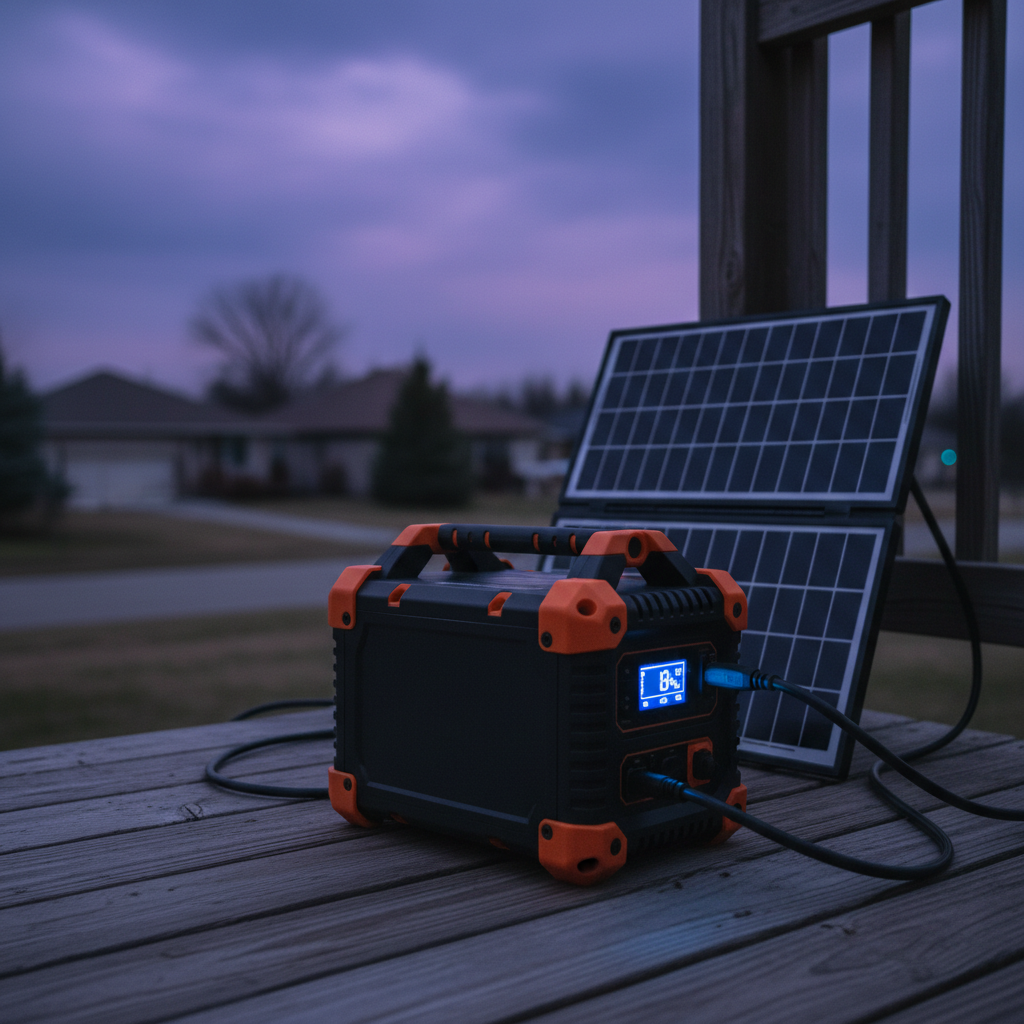
When the power finally came back on day five, I sat down and designed the exact solar and battery backup system I should have already had. Portable, practical, sized for real emergency loads, and deployable in various weather conditions. It wasn’t complicated. It wasn’t expensive relative to the misery it would have prevented. I just hadn’t done it.
This newsletter exists because most people are somewhere between “never thought about solar” and “know enough to be paralyzed by options.” I’ve spent years on the professional side of this industry. I know what works, what’s over-hyped, what the installers won’t tell you, and how to build real resilience without spending a fortune.
Every issue I will give you something specific: a concept explained plainly, an action you can take this week, and honest gear recommendations based on real-world use — not spec sheets.
⚡ Action Item This Week
If you have a generator: check your fuel situation right now. Test how long it will actually run your critical loads on a full tank. That number is your current vulnerability window — and it’s the exact gap a solar setup fills. I am not going to tell you to get rid of your generator, gas generators pair very well with battery/solar systems.
If you don’t have a generator: write down every device that would matter in a 72-hour outage. If you know the wattage of that device, write that down as well, if you don’t Google it. This list is the foundation of everything we build together that the information is critical.
Gear Pick: None for this week
Coming in Issue #002: The Solar Starter Stack — the three components every beginner needs, how to size them for a real outages by season, and why snow affects solar panels less than you’ve probably heard.
Stay powered,The Blackout Brief
About
The Blackout Brief helps households and communities prepare for long-term power outages with clear guidance from solar professionals. The Blackout Brief will provide practical checklists, equipment recommendations, and training so you can stay safe, informed, and resilient when the grid goes dark.
Dispatch
Weekly blackout playbooks, gear tests, and scenario drills.